

Menu
Group 1150 4

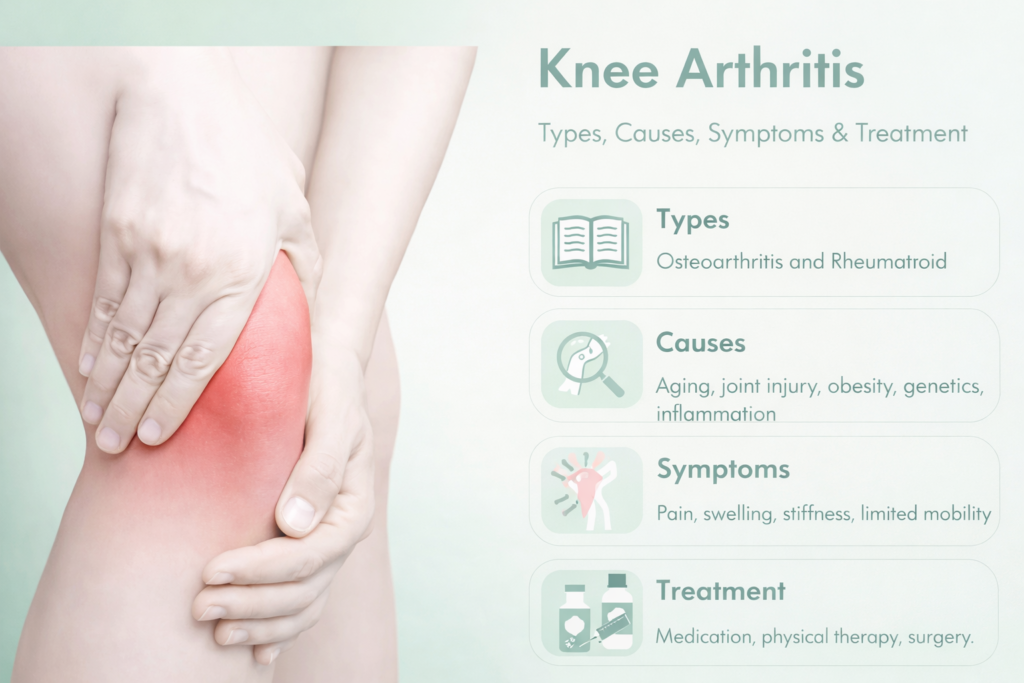
Knee Arthritis: Types, Causes , Symptoms & Treatment

What is Arthritis?

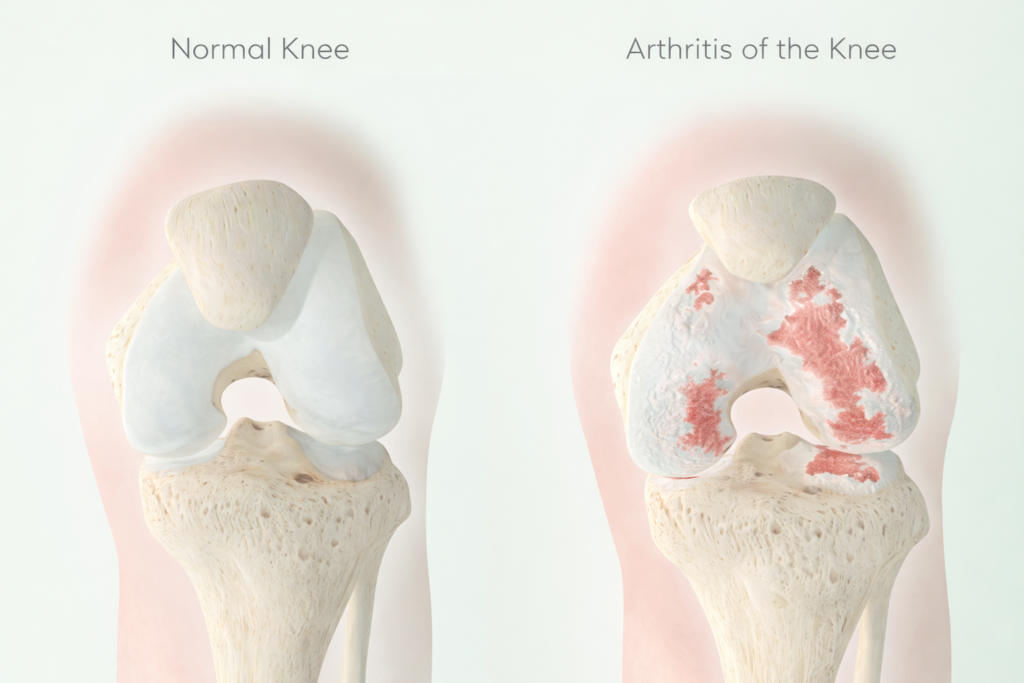
Knee arthritis is a chronic joint disease that leads to inflammation, stiffness, pain, and slow loss of movement. In arthritis of the knee, cartilage, which cushions the knee, erodes with time, allowing the bones to rub against one another. This causes pain during walking, standing, or bending. Knee arthritis normally occurs in old age, though it may also begin earlier due to overuse, injury, or inflammatory diseases that lead to destruction of joints.

Types of Knee Arthritis

The knee is affected by different types of arthritis. The most widely occurring type is osteoarthritis, which occurs due to the gradual erosion of cartilage. Rheumatoid arthritis is an autoimmune disease that causes a flare in the joints. A knee injury is followed by post-traumatic arthritis. These may take other forms due to metabolic issues or systemic diseases. It is important to know the precise type to select the appropriate non-surgical treatment.

Osteoarthritis (OA): The most common type of arthritis, caused by wear and tear on the joints, leading to the breakdown of cartilage.

Rheumatoid Arthritis (RA): An autoimmune disease where the body’s immune system attacks the joints, causing inflammation and joint damage.

Psoriatic Arthritis (PsA): A form of arthritis that affects some people with psoriasis, leading to joint pain and swelling.

Gout: Caused by the buildup of uric acid crystals in the joints, resulting in sudden, severe pain and swelling.

Ankylosing Spondylitis: A type of arthritis that primarily affects the spine, causing inflammation and can lead to fusion of the vertebrae.

Juvenile Arthritis: A term used to describe arthritis in children under the age of 16.

The most common among them are Osteoarthritis (OA) and Rheumatoid Arthritis (RA).

Symptoms of Knee Arthritis

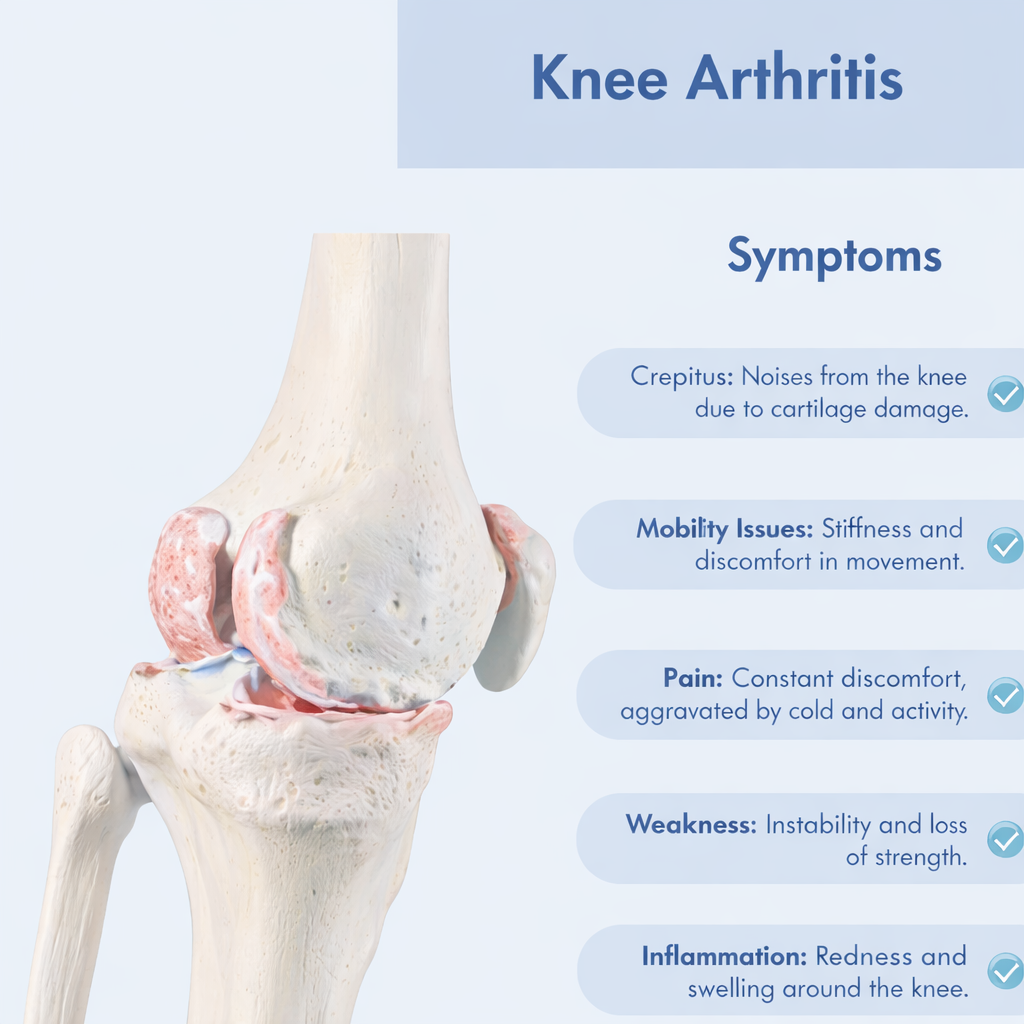
Characteristic symptoms of knee-arthritis are:

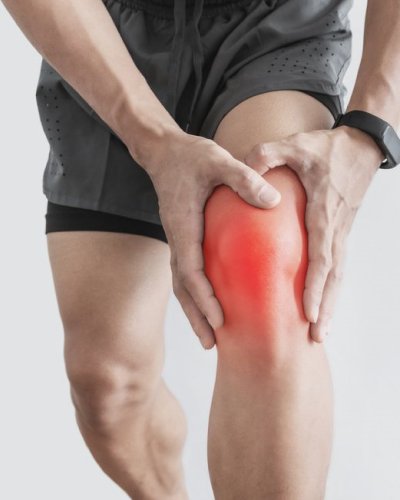
  • Persistent knee pain
  • Stiffness after rest
  • Peripheral edema and loss of movement
  • Knee pain with weight-bearing


Individuals tend to be in a poor state in the morning or when sitting for long periods. They can also experience a grinding sound, wobbling, or a deficiency of stamina as the disease advances. Unless treated early, they may interfere with the everyday life of the individual, diminish their freedom of action,n and generally decrease their quality of life.
Causes of knee arthritis are:

Causes of knee arthritis are:

  • Cartilage degeneration due to age
  • Repeated mechanical stress
  • Chronic inflammation

Knee arthroplasty is accelerated by prior knee injuries, such as ligament rupture or injury. Extra weight also imposes an extra burden on the knee, whereas autoimmune or inflammatory processes may further deteriorate cartilage. Combined, these lead to faster pain and deterioration of joints.

Risk Factors for Knee Arthritis

Common risk factors are:
  • Older age
  • Obesity
  • Sedentary habits
  • Weak knee-supporting muscles
  • Misaligned joints
  • Family history
Occupations that entail bending of the knee repeatedly or heavy lifting also increase the risk. People are more susceptible to sports-associated injuries or inadequate rehabilitation. The early detection of these risks enables preventive measures to be taken that guard the knee and limit the disease.
image 519

Diagnosis of Knee Arthritis

1. Clinical History

In-depth history seeks to understand when the symptoms of knee arthritis started, what causes the pain to increase or decrease, how the knee reduces its functionality, and previous injuries. The knowledge of work requirements, physical exercise, and lifestyle can reveal mechanical loads on the knee. This data underlies an individual, non-surgical plan.

2. Physical Exam

The physical examination observes swelling, tenderness, range of motion, alignment, muscle strength, and gait. Observing the walking style of an individual may indicate overloading compensations of the knee. Functional tests indicate the severity of the disease and the necessity of rehab.

3. Neurological Assessment

Instant reflex, sensation test, and muscle action test eliminate nerve causes of arthritis. This is to make sure that the symptoms are indeed joint-related and not nerve-based or spinal in origin.

4. Special Test

Orthopaedic examinations include tests of ligament stability, meniscal stability, and tracking of the patella. These aid in distinguishing between knee arthritis and soft tissue trauma, which could be confused with joint pain.

5. Imaging Studies

X-rays reveal that there is reduction of the joint space, bone spurs, and misalignment. MRI provides a fine image of cartilage, meniscus, ligaments, and soft tissue. The diagnosis is confirmed with imaging that assists in making the best non-surgical treatment.

Comprehensive Non-Surgical Treatment Options for Knee Arthritis

Non-surgical management of arthritis of the knee involves the management of the pain, the preservation of the joint structure, and the restoration of the functions without surgery.

1. Nerve Blocks

Image-guided nerve blocks inhibit pain signals. They offer localized pain relief and aid patients to endure physiotherapy and other exercises.

2. PRP (Platelet-Rich Plasma Therapy)

PRP involves the injection of growth factors in the blood of the patient to minimize inflammation and maintain joint wellness. It is progressively utilized to manage signs and symptoms of knee-arthritis and enhance functionality.

3. Prolotherapy

Prolotherapy uses a regenerative agent that stiffens the ligaments and other tissues that support the joints. This enhances stability, decreases abnormal motion, and reduces chronic pain.

4. Radiofrequency

Radiofrequency ablation alters the pain-transmitting nerves serving the knee. It provides a lasting relief to individuals whose symptoms do not respond to conservative care.

5. Physiotherapy

Planned physiotherapy develops muscle balance, joint mechanisms, flexibility, and endurance. Exercise exercises that strengthen muscles surrounding the knee minimize load to the degrading cartilages and enhance the stability of the joints.

6. Lifestyle Changes

The most important measures of long-term management of arthritis of the knee include weight control, activity adjustment, ergonomic corrections, and appropriate nutrition. These are supplementary to medical treatments and delay the disease.

Prevention of Knee Arthritis

1. Healthy Lifestyle Choices

Exercise that is of low intensity, a healthy diet, and a healthy weight reduce the stress on the joints. Toning of muscles surrounding the knee enhances shock absorption and takes care of the knee joint.

2. Avoiding Joint Injuries

Proper training methods, appropriate footwear, and a gradual increase in activity minimize the risk of injuries. Immediate post-injury rehabilitation helps to avoid permanent joint injury.

3. Early Detection and Treatment

Early assessment and limited treatment accelerates the deterioration of cartilages, maintains functionality of the knee joint, and delays progressive degeneration.

How Are We Different from Other Clinics/Orthopedics?

Alleviate Pain Clinic is a clinic dedicated to non-surgical pain management. The arthritis in the knee pain specialist offers care that is developed on evidence-based interventions, regenerative medicine, and functional restoration rather than rapid symptom solutions and early surgery.

Why Choose Alleviate Pain Clinic for Knee Arthritis Treatment?

Experienced pain specialists, image-directed treatments, tailor-made rehabilitation programs, and current regenerative procedures are all appreciated by patients. Alleviate Pain Clinic focuses on long-term joint preservation, enhanced mobility, and non-surgical pain management provided by knee arthritis doctors in Bangalore.

Frequently Asked Questions
What are non-surgical knee arthritis treatment options?

Non-surgical knee arthritis treatments include physiotherapy, image-guided nerve blocks, platelet-rich plasma injections, prolotherapy, radiofrequency procedures, and lifestyle modifications. These approaches aim to reduce pain, improve joint function, and slow disease progression without surgical intervention.

Which knee arthritis doctors in Bangalore specialize in PRP?

Knee arthritis doctors in Bangalore who specialize in PRP are typically pain management physicians with training in regenerative medicine. Clinics like Alleviate Pain Clinic offer image-guided PRP treatments tailored to arthritis severity and patient-specific functional needs.

What is the knee arthritis treatment recovery time without surgery?

Recovery time for non-surgical knee arthritis treatment varies by procedure. Most patients resume routine activities within a few days, while pain relief and functional improvement gradually develop over several weeks as inflammation reduces and joint stability improves.

How to prevent knee arthritis progression non-surgically?

Preventing knee arthritis progression involves weight management, strengthening surrounding muscles, correcting posture and biomechanics, modifying activities, and initiating early non-surgical interventions. Consistent physiotherapy and regenerative treatments can significantly slow cartilage degeneration and maintain joint mobility.

What causes arthritis in the knees most commonly?

The most common causes of knee arthritis include age-related cartilage degeneration, obesity-related joint overload, previous knee injuries, repetitive mechanical stress, and genetic predisposition. These factors gradually reduce joint cushioning and lead to chronic pain and stiffness.

What is PRP therapy and how does it work for knee osteoarthritis?

PRP (Platelet-Rich Plasma) therapy involves drawing a small amount of the patient’s blood, processing it to concentrate platelets, and then injecting the PRP into the knee joint. Platelets release growth factors that promote tissue repair, reduce inflammation, and potentially alleviate knee osteoarthritis symptoms.

What are the benefits of regenerative therapies for knee osteoarthritis?What are the benefits of regenerative therapies for knee osteoarthritis?

Regenerative therapies like PRP (Platelet-Rich Plasma) and stem cell therapy promote natural healing processes by delivering growth factors or stem cells to the affected area. They aid tissue repair, reduce inflammation, and potentially slow down disease progression

Video Spotlight

youtube tmbnal
Blog

Surgery-Free Solutions

Expert Tips for Pain Management

Knee os
Osteoarthritis Knee Stages and Treatment Options: Detailed Guide for Relief at Every Stage
Osteoarthritis (OA) progresses through four distinct stages, each requiring unique treatment strategies...
Read More
Knee Pain While Squatting
Knee Pain While Squatting: Understanding, Causes, Prevention and Treatment
Knee pain during or after squatting is a common issue affecting many individuals, whether they are athletes,...
Read More
Frame 1232 1
Comprehensive Solutions for Knee Pain: PRP and Prolotherapy
Knee pain can significantly impact one's quality of life, hindering mobility and causing discomfort....
Read More

Testimonials

Words From Our Patients

The treatment was very good and the doctor Faraz Ahmed was very kind to the patient and explained clearly the procedure of knee bilateral ha & treatment And we were advised to do physiotherapy. We are very much satisfied. We would recommend this alleviate pain clinic. Thank you

Kodumudi Padmanabhan

Got treatment of Treatment and HA for right knee arthritis a month ago and finding good relief from pain. Was treated by Dr Swagtesh Bastia who explained very well about the injections and the treatment was painless. The front desk staff were very kind and very helpful and physiotherapy was also done expertly, overall good experience

ym sandhya

Alleviate Pain Management clinic has been a godsend for my mom's knee pain. She has been treated by Dr. Wiquar Ahmed. The attentive staff provided personalised care, and after her treatment, she's feeling remarkably better. Thank you for giving my mom the relief she deserves!

Lokesh K

The clinic is super clean with a great OT and most importantly all the staff here are very helpful and considerate. My gratitude to Dr Roshan, the nurses, and support staff - they were always available to assist with any issues post procedure and they even made an extra effort to make a home visit for a follow up check-up. This team here is the perfect example of healing and care with a human touch. Thank you!!!!!

Tanya Raj

My wife had knee pain I have visited alleviate pain and consulted doc santhoshi now she is able to walk pain free and can do her daily activity than before.the physiotherapist here Dr akhila also helped her with few exercises and the staff here Abdul explained all the procedures well . Thank you PPL can visit here for pain relief

Muniraju


Wait! Don’t
Leave in Pain!

We’re just call away from helping you live pain-free.
Call now for a consultation 080-25256878

Call Us Now

Limited Slots Available Today